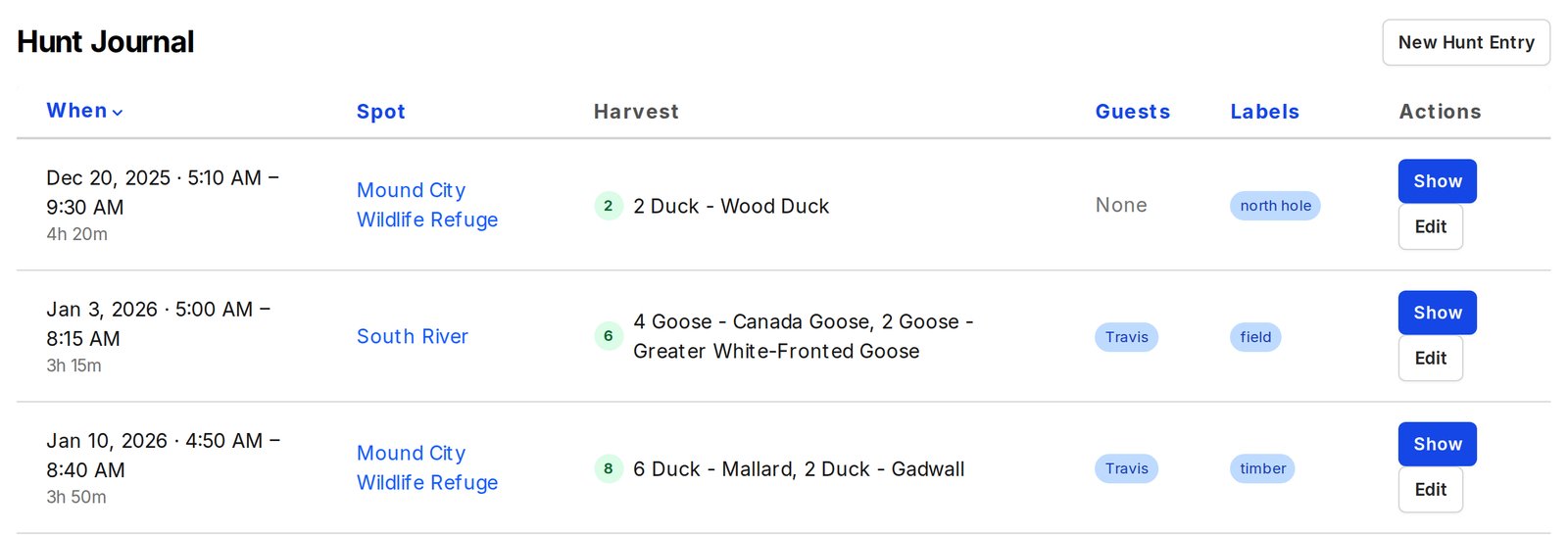
Hunt Journal
Track hunts and spot patterns
Log each hunt with the spot, times, harvest by species, guests, labels, and notes. Your own results then sit next to FowlTracker's on every spot page.
How it works
FowlTracker shows you what has already happened on a piece of ground and lines it up with the weather and your own hunt log. You still make the call. You just make it with more than a hunch.
The routine
Drop a pin on the holes, fields and woods you hunt, or find public ground on the Public Lands list. Saving spots is free on every plan.
Each spot shows what has actually happened on that ground: nights of roost activity for ducks and geese, how the ground ranks for turkey and deer, and the state's own harvest figures for public land.
Put the history next to a seven-day forecast, then layer wind, temperature and precipitation over the map before you commit to a morning.
Record the hunt with times, harvest by species, guests and notes. Your own results sit next to FowlTracker's on every spot from then on.
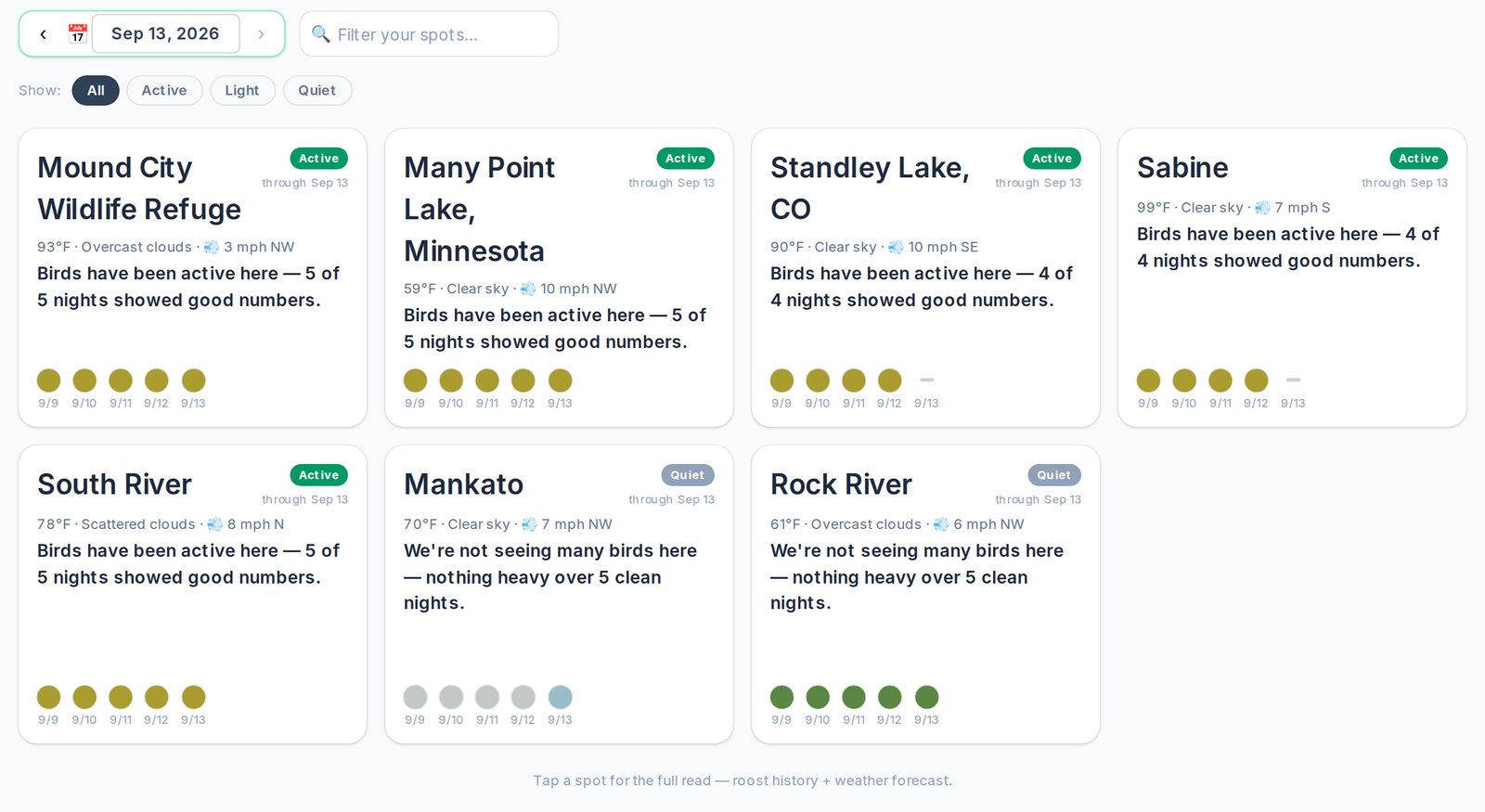
Every saved spot, sorted best-first
FowlTracker opens on your Spots board. With Premium, each card tells you in one line whether birds have been using that ground, with the weather at a glance.
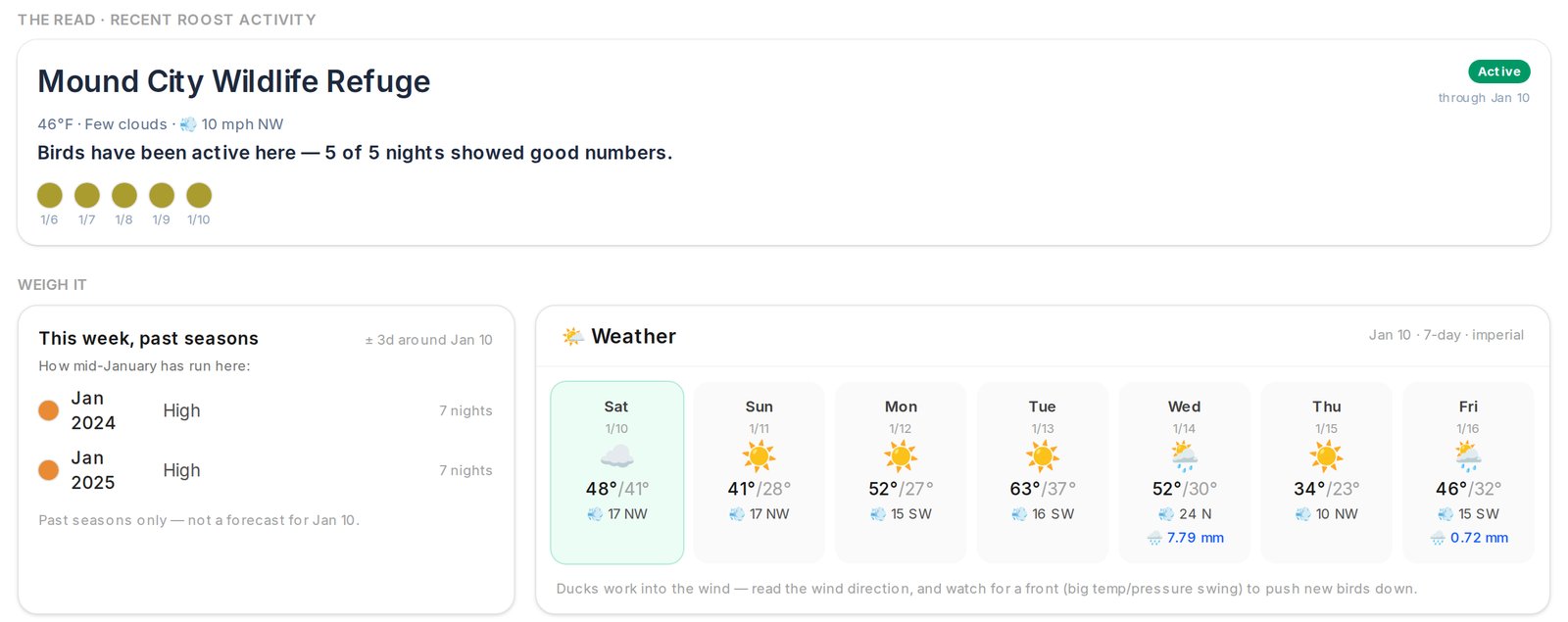
Weigh a spot before you make the call
A single night can fool you. Pick the day you are planning to hunt and a spot's page lays out the evidence in the order you would actually weigh it.
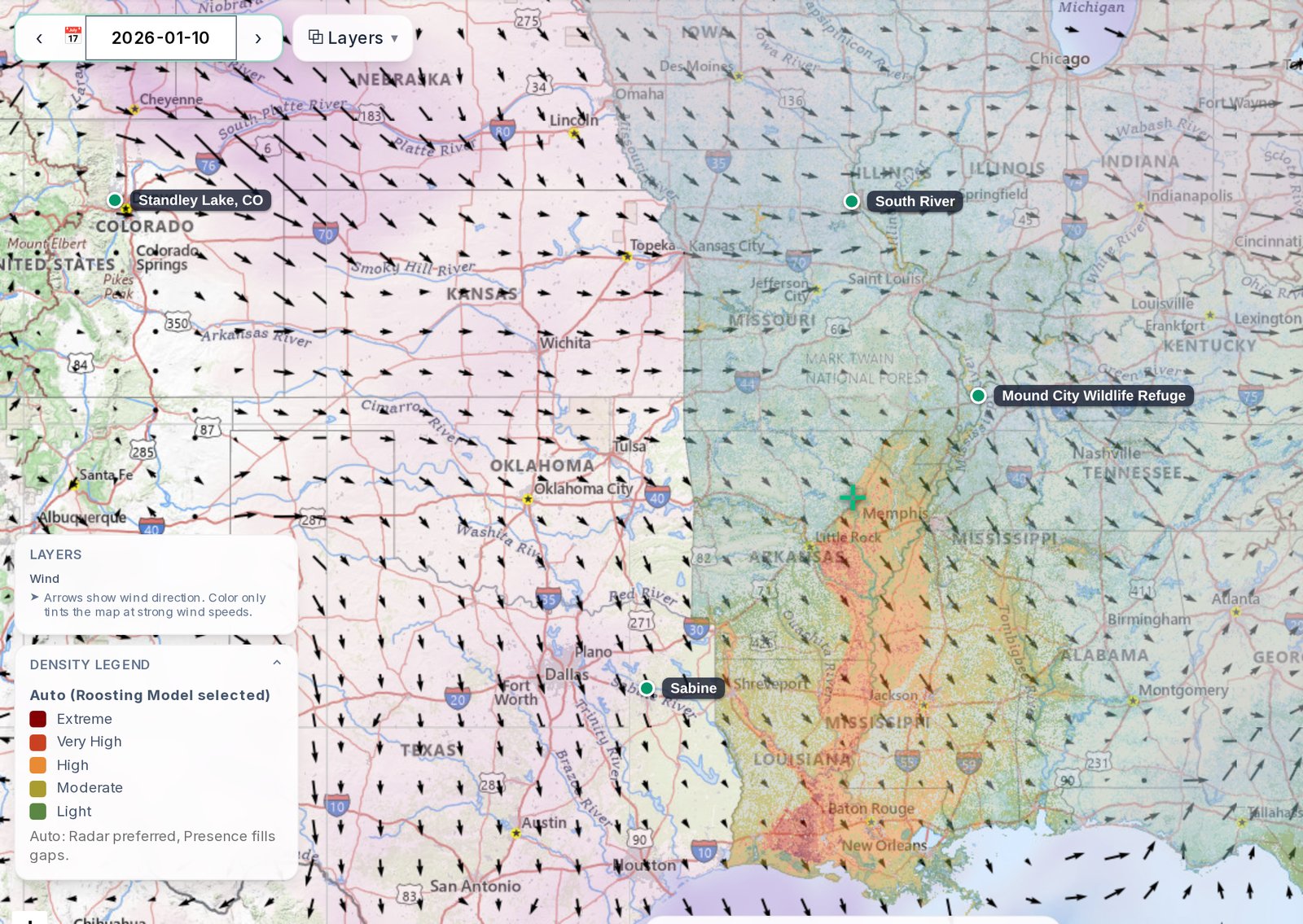
Line up weather with where birds are holding
Layers stack, so you can run wind over wetlands over satellite imagery if that is the picture you need to make the call.
Tools hunters use all season
Track hunts and spot patterns
Log each hunt with the spot, times, harvest by species, guests, labels, and notes. Your own results then sit next to FowlTracker's on every spot page.
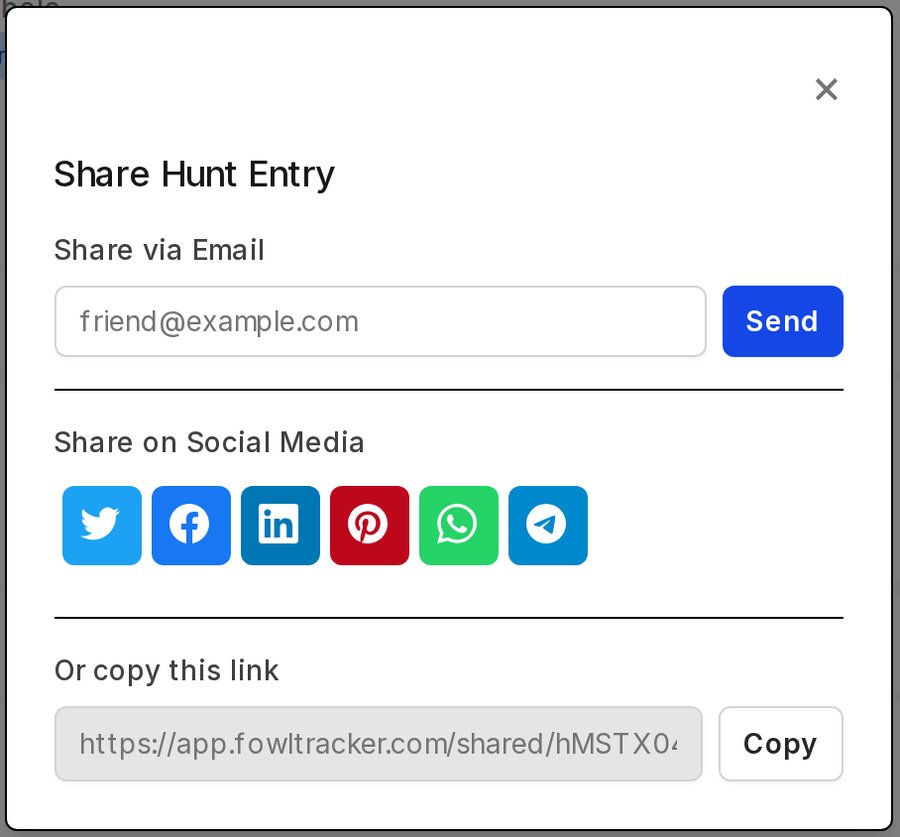
Send a hunt to your buddies
Share a single hunt entry by email, to social, or with a private link.
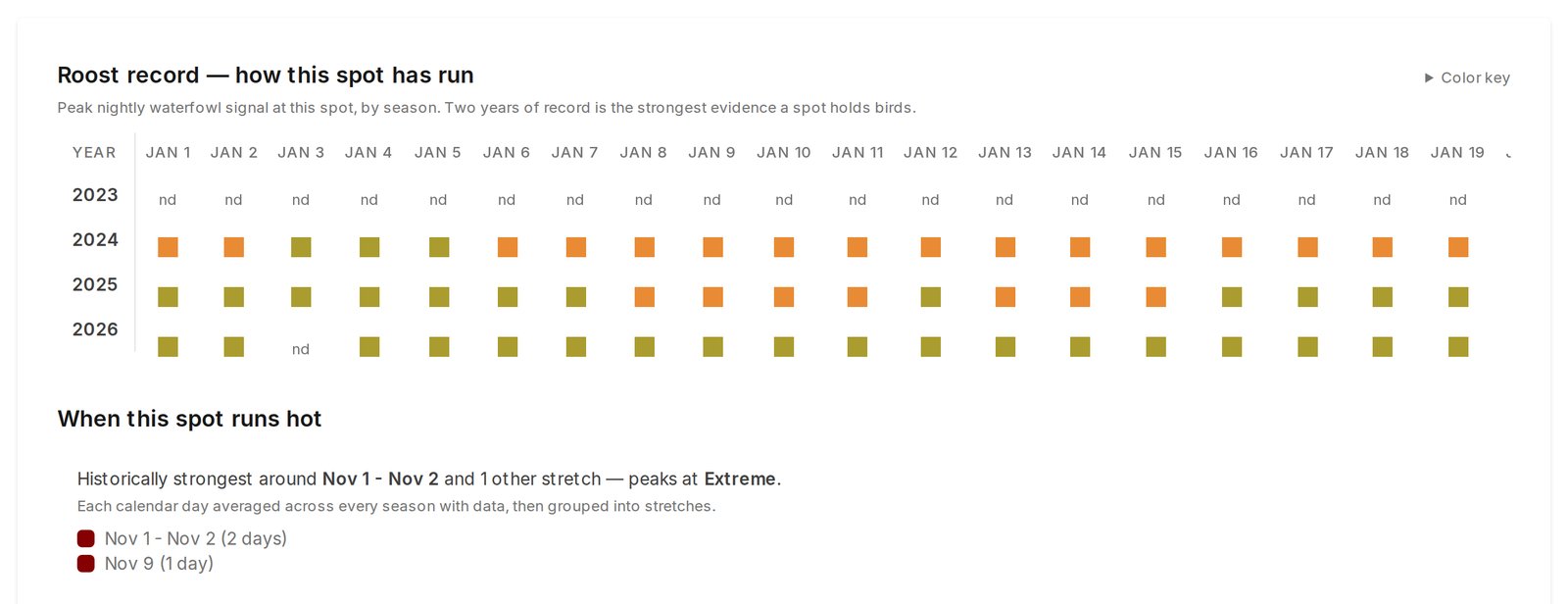
See when a spot runs hot
With Premium, every saved spot shows its roost record season by season, September through April, plus the stretches of the year it has historically been strongest.
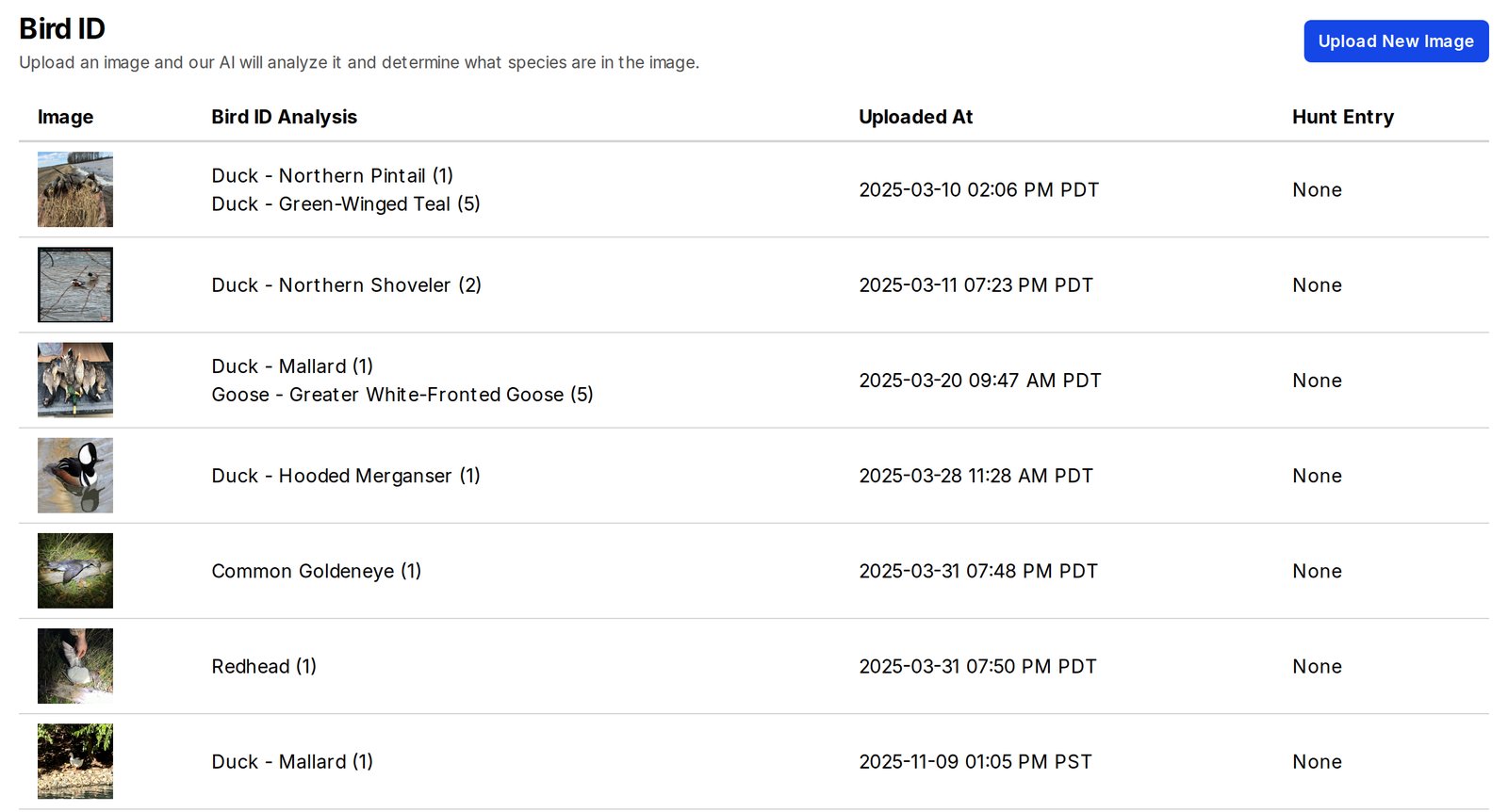
Identify birds from your photos
Upload a photo and Bird ID lists the species it can see. Photos on a hunt entry are identified automatically.
Where the data comes from
Everything in FowlTracker except the weather forecast is a record of what already happened. Here is where each piece comes from.
The Roost model reads weather radar for birds lifting off roosts at dawn, night by night.
The Presence model is built on GPS-tracked waterfowl and runs every day of the year, coast to coast.
The turkey and deer habitat layers score every 100-foot square of the eastern US on its mix of woods and fields.
Spring turkey and deer harvest, season dates and bag limits, reported by state wildlife agencies for their public land, with USGS public land boundaries.
Start free, save your spots, and see how it lines up with what you are seeing in the field.